
InvokeAI vs. ComfyUI
Two programs side by side: Who is each one for, what runs on your hardware, and how much work is the installation?
In short
If you want to intentionally create and edit images, InvokeAI is the better choice: a canvas with layers and inpainting, almost like a painting program. ComfyUI is more flexible and usually supports new models first, but it can be confusing at the start. With an AMD card on Windows, only ComfyUI is an option of the two.
InvokeAI
Choose InvokeAI if you want to edit and refine images in a painting program style.
ComfyUI
Choose ComfyUI if you want to use the latest image and video models and build your own workflows.
The most important differences
| InvokeAI | ComfyUI | |
|---|---|---|
| What for | Clean image editor with canvas, layers, and inpainting, ideal for creative work. | A very flexible program for AI image, video, and audio, where you put together workflows from nodes. |
| Who it’s for | For beginners | For advanced users |
| Installation | Installation is easy | Installation is easy |
| Use | Web interface in the browser (as a desktop app via launcher) | Web interface in the browser with node editor (also as a desktop app) |
| Windows | yes | yes |
| Linux | yes | yes |
| macOS | yes | yes |
| NVIDIA | yes | yes |
| AMD | limited | yes |
| Intel Arc | yes | yes |
| Apple (M chips) | yes | yes |
| processor only | limited | limited |
| Hardware note | AMD is supported only on Linux (ROCm), not on Windows; Intel Arc runs on Windows and Linux; Macs with Apple Silicon and at least 16 GB of memory are recommended. | For Windows, there are separate portable packages for NVIDIA (CUDA), AMD (ROCm), and Intel; a CPU mode is possible, but very slow. |
| Price | free | free (plus optional cloud service Comfy Cloud) |
| License | Apache-2.0 · Open Source | GPL-3.0 · Open Source |
| By | InvokeAI-Community (Lincoln Stein, Blessedcoolant) | Comfy Org |
| Version | v6.14.2 (Sep 27, 2026) | v0.42.1 (Oct 19, 2026) |
Strengths and weaknesses
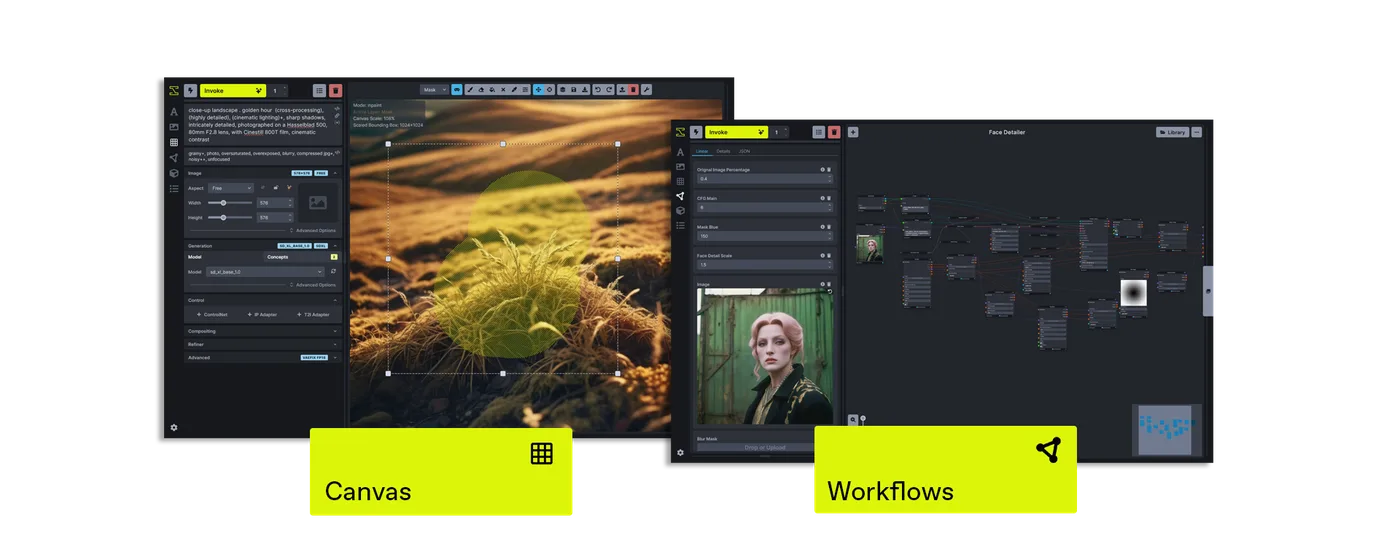
InvokeAI
- Very clean, polished interface
- Powerful canvas with layers and inpainting
- Easy installation via launcher
- Free Apache license
- AMD not supported on Windows
- No company behind it anymore, only the community
For you if you want to edit and refine images in a painting app with precision.
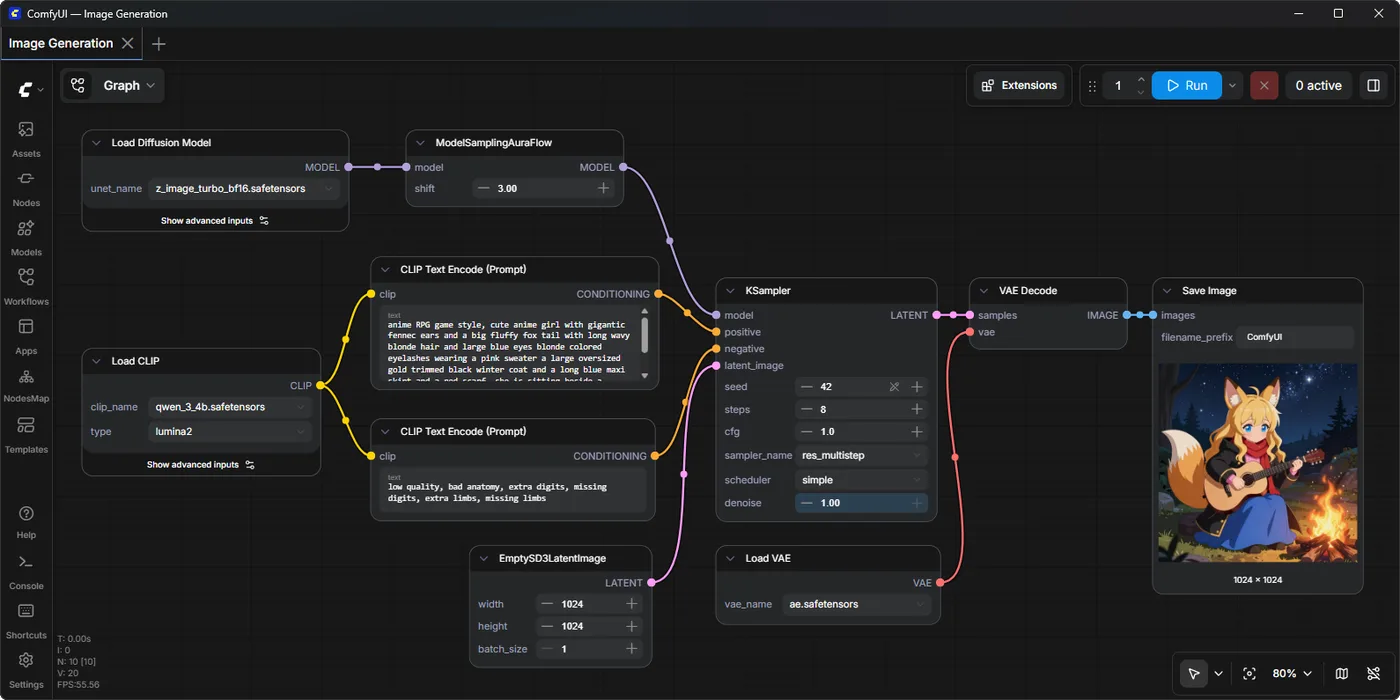
ComfyUI
- Usually supports new models first
- Very flexible thanks to node workflows
- Desktop app and portable version for Windows
- Huge selection of extensions (custom nodes)
- Runs on NVIDIA, AMD, Intel, and Apple
- Node interface can be confusing at first for beginners
- Third-party extensions can introduce conflicts or security risks
- Frequent updates sometimes change workflows
For you if you want to use the latest image and video models and precisely control what happens.
How to install them
InvokeAI
You download the Invoke Launcher (.exe) from invoke.ai; it installs and starts InvokeAI and helps load the models.
ComfyUI
The easiest way is to download the official desktop app (Windows installer .exe) from comfy.org. Alternatively, there is a portable 7z version for NVIDIA, AMD, or Intel: unpack it and start the matching run_…_gpu.bat.
Guide: Set up and maintain ComfyUI on Windows
Guide: Your First Image with ComfyUI
Download programs only from the official site or the official repository.
Frequently Asked Questions
Which is better, InvokeAI or ComfyUI?
If you want to intentionally create and edit images, InvokeAI is the better choice: a canvas with layers and inpainting, almost like a painting program. ComfyUI is more flexible and usually supports new models first, but it can be confusing at the start. With an AMD card on Windows, only ComfyUI is an option of the two. Choose InvokeAI if you want to edit and refine images in a painting program style. Choose ComfyUI if you want to use the latest image and video models and build your own workflows.
Does InvokeAI run with an AMD card on Windows?
No. InvokeAI supports AMD only on Linux with ROCm. ComfyUI offers its own package for AMD cards on Windows.
More comparisons
Checked on Oct 21, 2026. All details in depth: InvokeAI and ComfyUI.