Overview
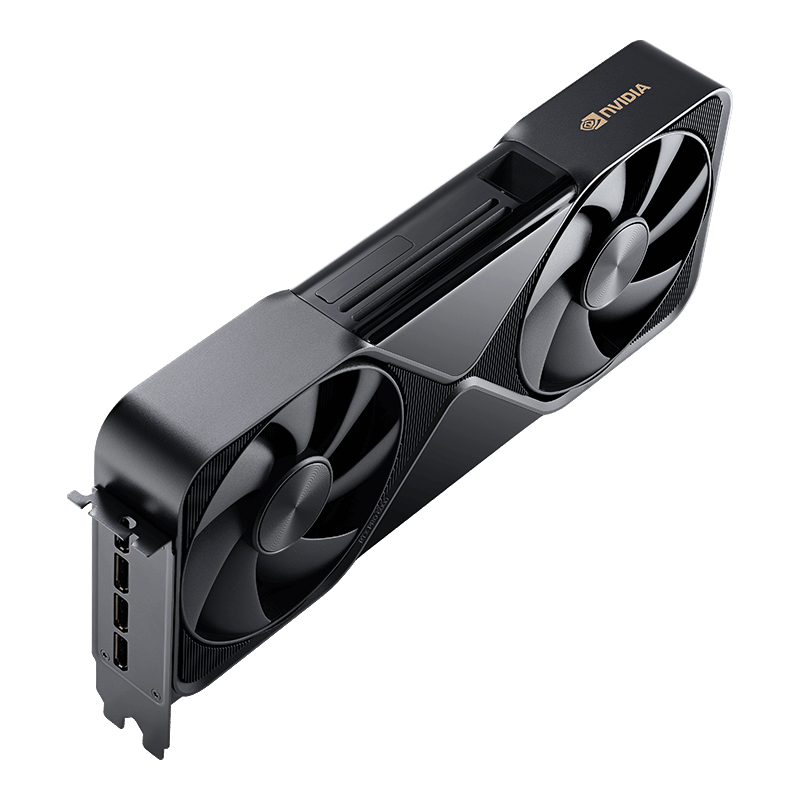
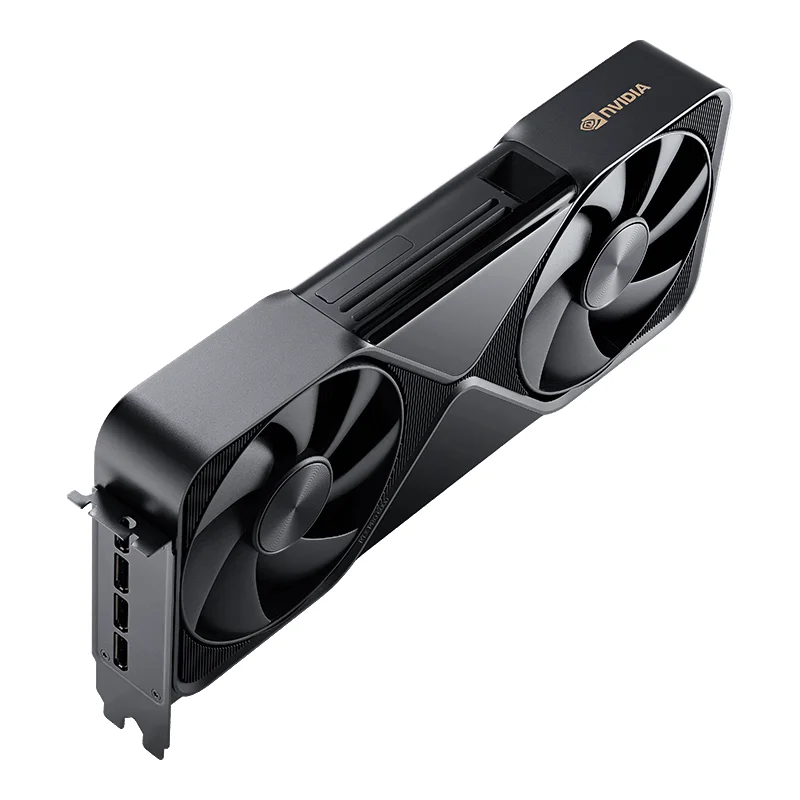
The RTX PRO 6000 Blackwell Workstation Edition is the top model in NVIDIA's professional graphics cards for workstations. NVIDIA calls it the most powerful desktop GPU the company has ever built. The RTX PRO lineup with Blackwell architecture was unveiled in March 2025 at the GTC developer conference. According to NVIDIA's press release, this card went on sale starting in April 2025 through distributors such as PNY, and from May on it was also available in complete systems from Dell, HP, Lenovo, and others.
There are three versions of the RTX PRO 6000: this Workstation Edition with 600 W, the more power-efficient Max-Q version with 300 W, and a passively cooled Server Edition for data centers. Inside is the large GB202 chip with 24,064 CUDA cores. The standout feature is the graphics memory: 96 GB of GDDR7 on a single card. A GeForce RTX 5090 has 32 GB.
What it means for AI
For local language models, graphics memory (VRAM) is the most important metric. If a model fits entirely in memory, it runs fast. If part of it has to be swapped out to RAM, performance drops sharply. As a rule of thumb, a model with 4-bit quantization, meaning heavily compressed weights, needs about 0.6 GB per billion parameters, plus buffer space for context.
A model with 70 billion parameters uses about 42 GB this way. On this card, more than half remains free, for example for very long texts or a second model. Models in the 120-billion class come to about 72 GB in 4-bit and also fit on a single card. Even a 70-billion model in 8-bit, which doubles the memory requirement, still fits just barely. For sizes like this, you would otherwise need two to three cards.
For answering, memory bandwidth matters most, because for each generated word, roughly the whole model has to be read once. According to NVIDIA, the card reaches 1,792 GB/s. For a 42-GB model, that translates to a theoretical ceiling of a little over 40 tokens per second, and in practice the number is lower. Phoronix tested the entire RTX PRO lineup in May 2026 under Ubuntu with llama.cpp and sees the cards clearly ahead of the previous generation and ahead of AMD and Intel. Tom's Hardware reported in May 2025, citing benchmarks from two other sites, that the card is on average 10 to 15 percent faster than an RTX 5090 at stock clock speeds.
MIG (Multi-Instance GPU) is practical for teams. It lets you split the card into up to four isolated instances with 24 GB each, for example for multiple users or services.
Technical details
In addition to the CUDA cores for general compute tasks, the card has 752 fifth-generation Tensor cores. These are special units for matrix operations, which constantly show up in neural networks. New is support for FP4, a 4-bit number format that saves memory. The 4,000 "AI TOPS" on the spec sheet apply to FP4 with sparsity. In this case, part of the weights are deliberately set to zero. Real models rarely reach these peak values.
The memory is attached to a 512-bit-wide bus and has ECC. This is error correction that detects and fixes flipped bits. The card connects via PCIe 5.0 x16.
The 600 W come through a single 16-pin connector. Cooling uses a "Double Flow Through" design: two fans push air through the card. DEVELOP3D describes that the card pulls air in from below and exhausts it upward. That keeps the GPU cool, but heats up the case. The card is two slots wide, but taller than usual: 13.7 cm high and 30.5 cm long. PNY lists a weight of 1.95 kg.
Who is it for?
This card is a fit for you if you want to run large language models starting at about 70 billion parameters locally without dealing with multiple cards. One card is easier to set up than two or three, and no time is lost moving data between cards. It is also worthwhile for fine-tuning, meaning retraining a model with your own data, which needs much more memory than just running it. If you share the card in a team, you benefit from MIG.
For models up to about 30 billion parameters, you do not need it. Much cheaper cards are enough.
Limitations
Price is the biggest hurdle. According to Tom's Hardware, the launch price was US$8,565. In June 2026, NVIDIA charged US$13,250 in its own store, an increase of 55 percent. Tom's Hardware cites the tight memory supply as the reason.
Power and heat are added costs. 600 W require a strong power supply, and the warm exhaust air stays inside the case. DEVELOP3D writes that some workstation cases are overwhelmed by the size, heat, and power demand. Only a few PCs are likely to support multiple cards, usually at most two. If they are placed close together, one card pulls in the other card's warm air. NVLink, a fast direct connection between cards, is not mentioned in the spec sheet. Multiple cards therefore exchange data over PCIe.
The "AI" part is not just marketing here: 96 GB on one card is a real advantage for large models.
Alternatives
- NVIDIA RTX PRO 6000 Blackwell Max-Q: same chip and same 96 GB at 300 W with a blower. According to DEVELOP3D, NVIDIA says it is only about 12 percent behind the larger version and is better suited for systems with multiple cards.
- NVIDIA RTX PRO 5000 Blackwell 72 GB: 72 GB and 1,344 GB/s at 300 W, for models up to about 100 billion parameters in 4-bit.
- AMD Radeon PRO W7900: 48 GB per card, two of them add up to 96 GB. In return, you work with AMD's ROCm instead of CUDA.
This report is based on manufacturer information and published tests; we did not test the device ourselves.