Overview
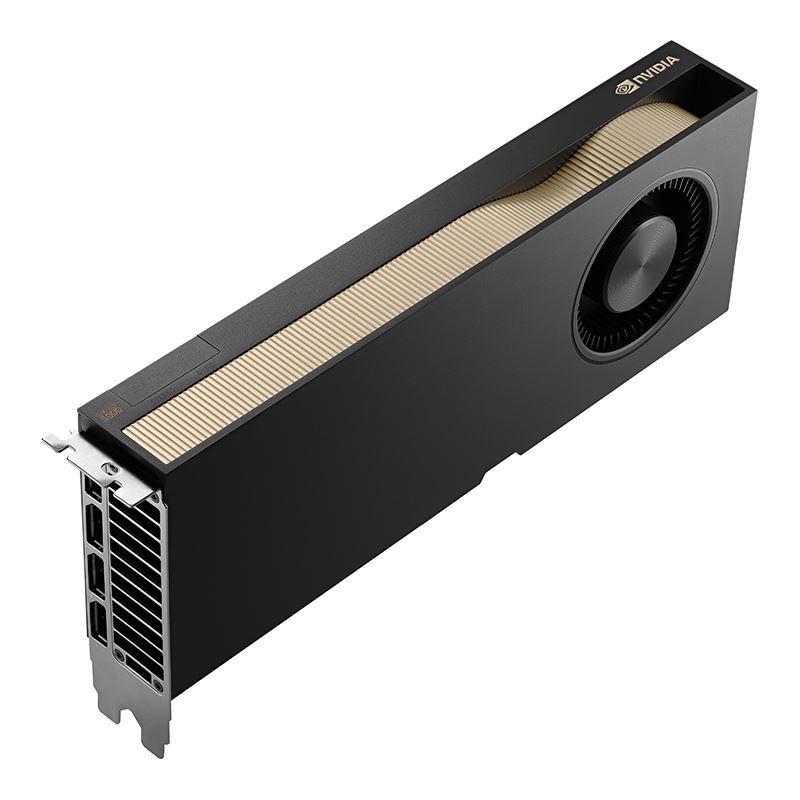
The RTX PRO 5000 Blackwell with 72 GB is a memory variant of the RTX PRO 5000. Aside from the VRAM, all published specs are the same: the same partially enabled GB202 chip with 14,080 CUDA cores, the same bandwidth, the same 300 W, and the same blower-style design. But instead of 48 GB, the card has 72 GB of GDDR7, so 50 percent more.
CG Channel reported the card on December 22, 2025 as available, initially through distributors like Ingram Micro, Leadtek, Unisplendour, and xFusion. In the RTX PRO lineup, it sits between the RTX PRO 5000 with 48 GB and the RTX PRO 6000 with 96 GB.
What it means for AI
For local language models, VRAM determines which models can run entirely on the card. As a rule of thumb, a model with 4-bit quantization, meaning heavily compressed weights, needs about 0.6 GB per billion parameters, plus buffer space for context.
A 70-billion-parameter model uses about 42 GB. On the 48 GB version, that is tight; here you still have about 30 GB left for long texts or a second, smaller model. Models up to about 100 billion parameters need about 60 GB in 4-bit and also fit. Models in the 120-billion class use about 72 GB. That no longer fits sensibly without buffer, so you need the RTX PRO 6000 or a second card.
Response speed mainly depends on memory bandwidth. According to NVIDIA, it is 1,344 GB/s. For a 42 GB model, that gives a theoretical ceiling of a little over 30 tokens per second, though the real-world number is lower. We did not find any in-house tests of the 72 GB version. But Phoronix tested the 48 GB version in May 2026 under Linux with llama.cpp. There, the RTX PRO 5000 was faster than the former top model RTX 6000 Ada. For models that fit in both versions, similar speed is to be expected because the chip and bandwidth are the same. CG Channel sees it the same way.
With MIG (Multi-Instance GPU), the datasheet says you can split the card into two isolated instances with 36 GB each. That is practical if two users or two services share the same card.
Specs in detail
The 440 fifth-generation Tensor cores are specialized units for matrix math in neural networks. They can compute with FP4, a 4-bit number format that saves memory. According to NVIDIA, the card reaches 2,064 AI TOPS, measured in FP4 with sparsity. In this mode, some weights are deliberately set to zero, and real models rarely reach such peak values. For FP32, NVIDIA lists 65 TFLOPS.
The memory is connected to a 384-bit bus. Some retailer pages list 512-bit, but NVIDIA's datasheet and PNY list 384-bit. ECC is included, an error-correction feature that detects and fixes flipped bits. The card connects via PCIe 5.0 x16.
Cooling is handled by a blower, also called a radial fan. It pushes warm air out of the case through the rear slot bracket. That makes it possible to install several cards close together. The card is two slots wide, 11.2 cm high, and 26.7 cm long. Power comes through a 16-pin connector.
Who is it for?
This card makes sense if 48 GB is not enough, but you do not want the price and power draw of an RTX PRO 6000 Workstation Edition. Typical use cases are 70-billion-parameter models with long context or models around 100 billion parameters. Two cards add up to 144 GB and fit well in a system thanks to the blower and 300 W.
Limitations
NVIDIA has not published a price. According to CG Channel, the IT reseller SHI listed the card for US$9,999. CG Channel says the street price is therefore closer to the RTX PRO 6000 with 96 GB than to the 48 GB version. That is its biggest weakness: for similar money, the RTX PRO 6000 Max-Q gives you more memory, more compute, and more bandwidth at the same 300 W.
Bandwidth is 25 percent lower than on the RTX PRO 6000. Large models therefore run noticeably slower. A blower is usually louder under load than large axial fans. NVLink, a fast direct connection between cards, is not listed in the datasheet. Multiple cards exchange data over PCIe. Availability was initially limited to a few distributors.
The "AI" here is meant seriously: the card's only real advantage is the larger memory, and that matters above all for AI.
Alternatives
- NVIDIA RTX PRO 6000 Blackwell Max-Q: 96 GB and 1,792 GB/s, also at 300 W and the same form factor.
- NVIDIA RTX PRO 5000 Blackwell 48 GB: same chip and same speed, less memory, much cheaper in stores.
- AMD Radeon PRO W7900: 48 GB, uses AMD's ROCm instead of CUDA.
This report is based on manufacturer information and published tests; we did not test the device ourselves.