Overview
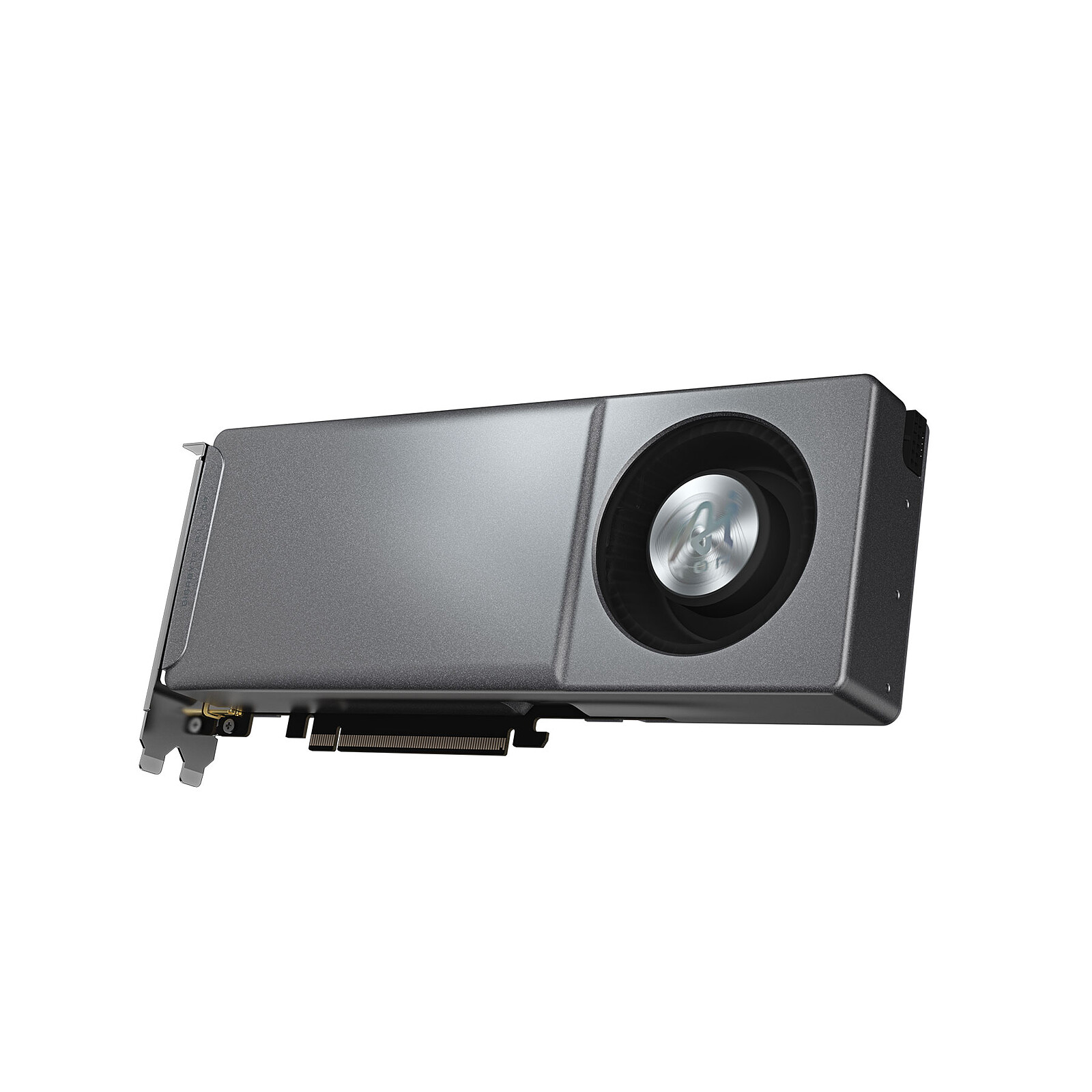
The GIGABYTE Radeon AI PRO R9700 AI TOP 32G is GIGABYTE’s version of AMD’s AI graphics card, the Radeon AI PRO R9700. Inside, it uses the Navi 48 chip with RDNA 4 architecture—the same graphics chip as in the Radeon RX 9070 XT gaming card, but with twice as much VRAM: 32 instead of 16 GB. GIGABYTE unveiled the card at Computex in May 2025. AMD kicked off finished workstations with the R9700 on July 23, 2025, and individual partner cards followed in the third quarter. The card is part of GIGABYTE’s AI TOP line, which also includes motherboards, power supplies, and SSDs for AI PCs.
What it does for AI
The most important spec is the 32 GB of VRAM. As a rough rule of thumb, a language model with 4-bit quantization needs about 0.6 GB per billion parameters plus some buffer for context. A model with 32 billion parameters therefore uses around 19 GB and fits with plenty of room left for long context. Models with around 70 billion parameters, on the other hand, need about 42 GB and do not fit on one card. With two cards, you get 64 GB and can split those models up.
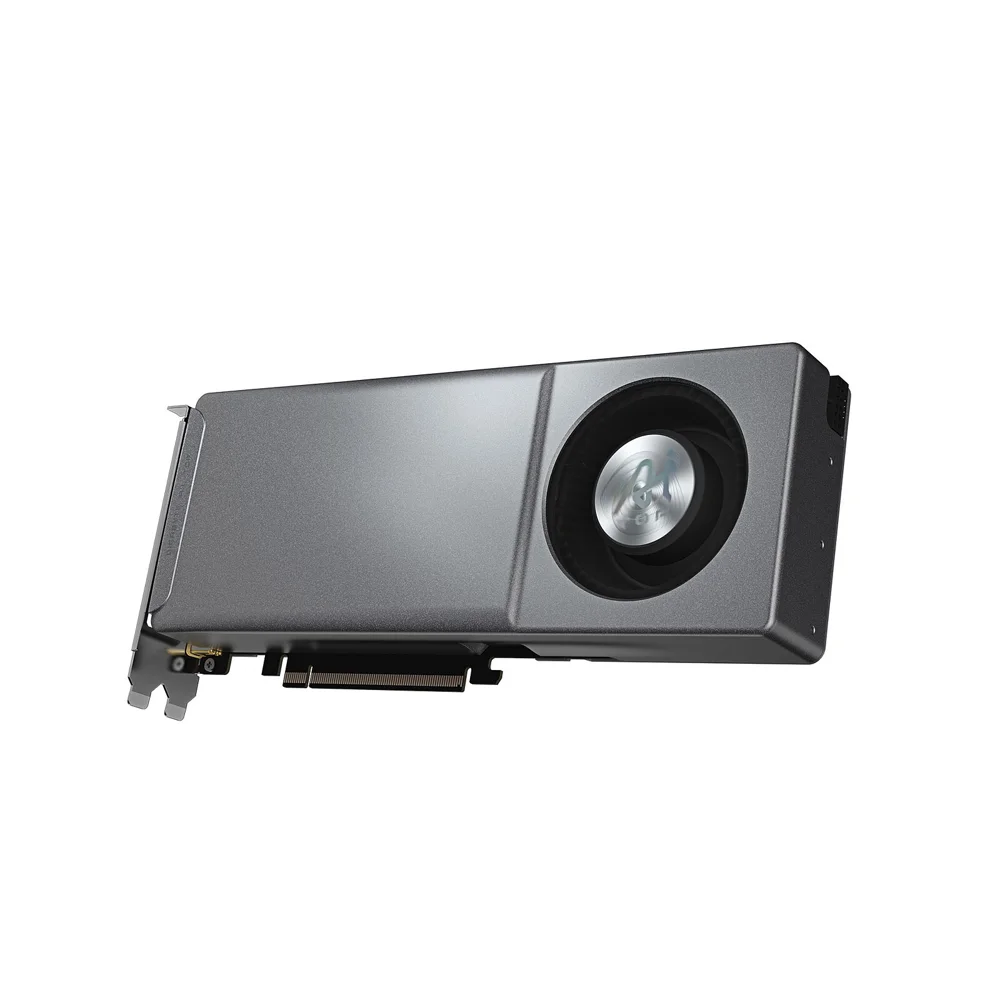
The R9700 AI TOP is built for multiple cards. The blower cooler draws in air and exhausts it out the back of the case. That way, cards installed close together do not heat each other up. The card is only two slots wide, so a compatible workstation board can hold four of them, for a total of 128 GB.
How fast a language model generates words depends mainly on memory bandwidth. Here, it is 640 GB/s. For a 32-billion-parameter model using 19 GB, that works out to a theoretical upper limit of about 33 tokens per second; in practice, the number is lower. A token is roughly a word segment. For comparison: cards with 48 GB, like the Radeon PRO W7900, reach 864 GB/s.
Specs in detail
According to AMD, the card has 64 Compute Units with 4096 stream processors and 128 AI accelerators. Puget Systems lists 47.8 TFLOPS at FP32 and 95.7 TFLOPS at FP16. FP16 is a 16-bit compute format commonly used for AI. Phoronix lists up to 1531 TOPS at INT4, but only with sparsity, meaning many values in the model are zero. For normal language models, that figure is not very meaningful.
GIGABYTE clocks the card at up to 2920 MHz and rates its power draw at 300 W. Power comes through a 16-pin connector, and an adapter for two 8-pin cables is included. GIGABYTE recommends a 750-W power supply. According to GIGABYTE, the cooler uses a copper vapor chamber, a flat heat spreader that quickly distributes heat. The card is 267 mm long and has three DisplayPort 2.1a outputs and one HDMI 2.1b output.
On the software side, AMD relies on ROCm, the open alternative to NVIDIA’s CUDA. AMD lists ROCm 6.4.1 with PyTorch, ONNX Runtime, and TensorFlow. Phoronix also tested the R9700 running on Linux with two cards. For simple language model apps like llama.cpp or LM Studio, you can also use Vulkan, which works without ROCm. GIGABYTE includes its AI TOP Utility, a program for fine-tuning models.
Who it makes sense for
This card is a good fit if you want to run language models up to around 32 billion parameters locally and need more memory than 16-GB gaming cards offer. For a system with two to four cards, the blower design is a clear advantage.
Limitations
Software is the biggest catch. ROCm mainly runs well on Linux, and many AI programs are built for CUDA first. Expect more tinkering than with NVIDIA. Blower coolers are also louder than large open-air coolers, and 300 W per card adds up fast with four cards. We could not find a separate price for the GIGABYTE card. According to Phoronix, AMD listed the R9700 at US$1,299. The “AI TOP” in the name mainly refers to GIGABYTE’s cooler, packaging, and bundled software. The chip is the same as in any other R9700.
Alternatives
- ASUS Turbo Radeon AI PRO R9700 or ASRock Radeon AI PRO R9700 Creator: same chip, same 32 GB, also with a blower.
- GIGABYTE Radeon PRO W7900 Dual Slot AI TOP 48G: 48 GB and 864 GB/s for larger models, but older architecture and much more expensive.
- NVIDIA RTX PRO 4000 Blackwell: less memory, but CUDA and very strong software support.
This report is based on manufacturer information and published tests; we did not test the device ourselves.